
Standard Botox dosing breaks into three primary zones: forehead (frontalis), glabella (corrugator/procerus), and crow's feet (orbicularis oculi). Most practices use 20 units forehead, 20 units glabella, and 12–16 units per side for crow's feet—a full-face treatment totaling roughly 60–70 units. These figures reflect the FDA-cleared indication (chronic migraine, blepharospasm, cervical dystonia) and cosmetic consensus built from two decades of clinical practice. Variation exists: lighter patients or first-timers may start at 15–18 forehead; aggressive correctors or male patients often need 25–30 glabella.
Injectables
Botox Units Per Area: Standard Dosing and Practice Economics
Typical neuromodulator units by facial zone, how to price per-unit, and what drives your margin on toxin revenue.
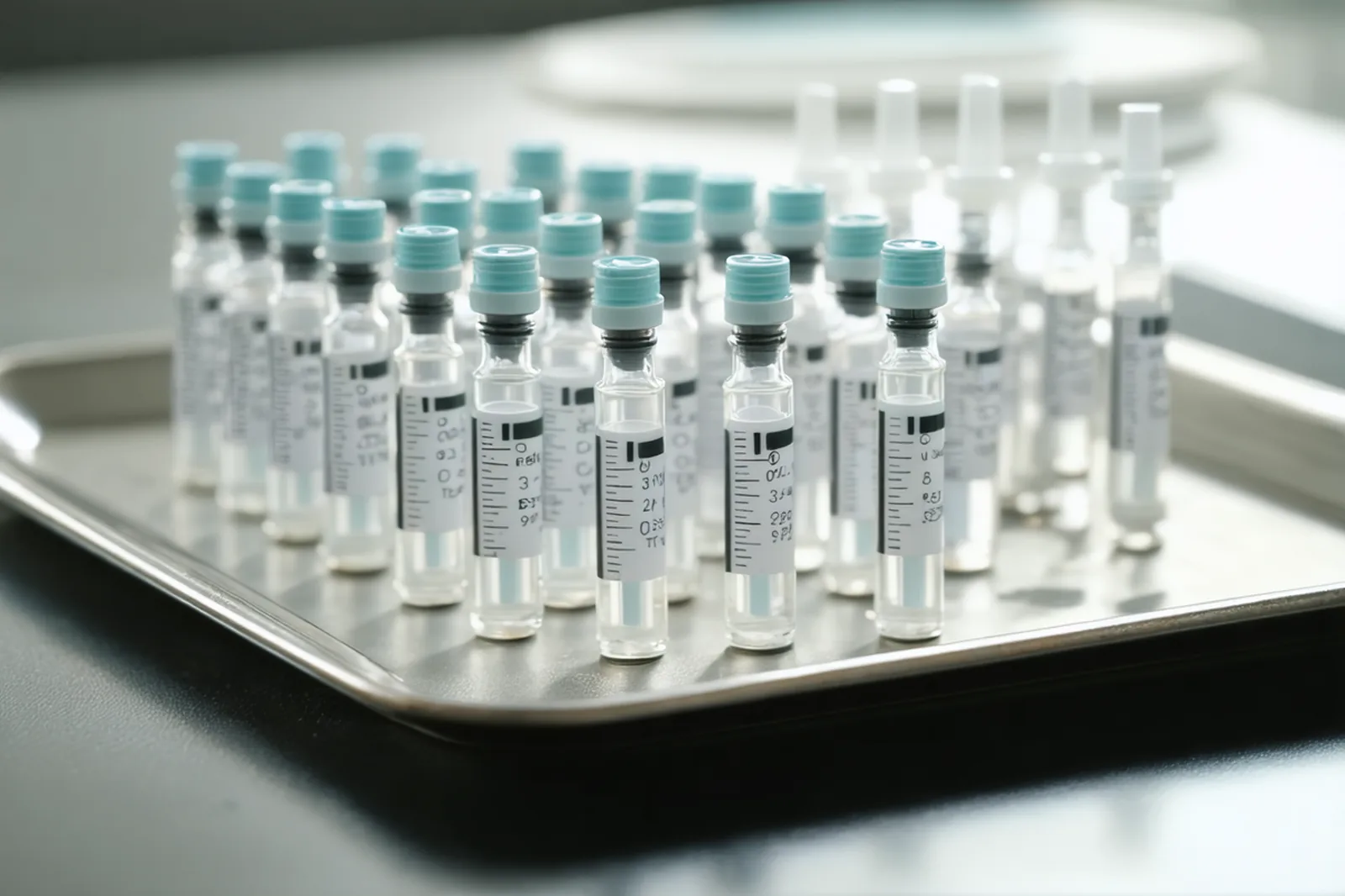
Standard full-face Botox treatment is 60–70 units (20 forehead, 20 glabella, 12–16 per side crow's feet) at $14/unit retail, yielding $510–$600 gross profit after toxin cost.
The forehead requires 15–25 units, typically 20. Inject 4–5 sites across the frontalis in a grid pattern, spaced roughly 1 cm apart, staying 1–1.5 cm above the eyebrow to avoid brow ptosis. Deeper injection (into muscle, not dermis) ensures diffusion stays within the frontalis; superficial placement risks lateral spread into the orbicularis oculi and unintended brow lift. Dosing is relatively forgiving here—the muscle mass is large and the anatomy straightforward.
Glabella (Corrugator/Procerus)
The glabella is the workhorse zone and demands precision. Standard dosing is 20 units split between corrugator (12 units, two injections per side) and procerus (4–8 units, midline). The corrugators are deep and strong; underdosing leaves dynamic lines visible on frowning. The procerus is smaller; overzealous dosing can flatten the bridge and create an unnatural appearance. Inject corrugators at the medial brow, angled slightly lateral and deep into muscle. Procerus sits at the glabellar crease, midline, injected vertically downward. This zone shows results fastest (3–5 days) and drives patient satisfaction most visibly.
Crow's Feet (Orbicularis Oculi)
Crow's feet typically receive 12–16 units per side (24–32 total). Inject 3 sites per side in a lateral fan: one at the lateral canthus, one 1 cm superior, one 1 cm inferior. Stay lateral to the orbital rim to avoid lower-lid involvement and ectropion. The orbicularis oculi is thin and superficial; light dosing suffices. Many practices reserve crow's feet for patients requesting full-face treatment or those with significant lateral lines; isolated crow's feet treatment is less common.
Per-Unit Economics and Pricing
Botox acquisition cost for most independent practices runs $3.50–$5.50 per unit, depending on volume, loyalty program tier (Alle, Aspire), and manufacturer rebate structure. A 100-unit vial costs roughly $350–$550 landed; a 50-unit vial runs $200–$275. Practices typically price Botox at $12–$16 per unit retail, yielding a gross margin of 60–70% per unit after cost of goods.
A standard 60-unit full-face treatment at $14/unit generates $840 revenue and costs $240–$330 in toxin, leaving $510–$600 gross profit. Practices with higher patient volume or direct relationships with AbbVie/Allergan Aesthetics may negotiate lower per-unit costs, improving margin. Practices using generic alternatives (Dysport, Xeomin) face different unit-to-unit ratios: Dysport requires roughly 2.5–3 units per Botox unit (so 150–180 Dysport units for a 60-unit Botox equivalent), though pricing per unit is often lower.
Dilution and Reconstitution
Standard reconstitution is 2.5 mL normal saline per 100-unit vial, yielding 4 units/0.1 mL (40 units/mL). Some practices dilute to 2 mL (50 units/mL) for finer control or 3 mL (33 units/mL) for broader diffusion in larger muscles. Dilution affects needle gauge, injection volume, and diffusion radius—tighter dilution (higher concentration) allows smaller volumes and more precise placement; looser dilution spreads further and suits larger treatment areas. Shelf life after reconstitution is 4 weeks refrigerated; many practices reconstitute fresh vials weekly to ensure potency and reduce waste.
Variation by Patient and Outcome Goals
Male patients often require 25–30% more units than women, owing to larger muscle mass and stronger corrugators. Patients with prior toxin exposure may develop antibody resistance, requiring higher doses or longer intervals between treatments. First-time patients benefit from conservative dosing (15–18 forehead, 18 glabella, 12 crow's feet) to assess response; subsequent treatments can be titrated upward. Patients seeking "natural" results typically receive 40–50 units total; those pursuing aggressive smoothing may receive 80–100+ units across all zones.
Treatment results appear at 3–5 days, plateau at 10–14 days, and last 12–14 weeks on average. Practices should schedule follow-up consultations at 2 weeks to assess and adjust. Consistent retreatment every 12 weeks maintains results and builds patient loyalty; many practices offer package pricing (e.g., three treatments prepaid at 10% discount) to lock in recurring revenue.
Frequently asked questions
How many Botox units do I need for a full face treatment?
A standard full-face treatment typically uses 60–70 units: 20 units forehead, 20 units glabella, and 12–16 units per side for crow's feet. Lighter patients or first-timers may start at 15–18 forehead, while male patients or those seeking aggressive correction often require 25–30 units in the glabella.
What is the standard Botox dosing for the glabella?
The glabella receives 20 units total: 12 units split between the corrugators (two injections per side) and 4–8 units in the procerus midline. The corrugators are deep and strong, so underdosing leaves dynamic lines visible; the procerus is smaller, so overzealous dosing can flatten the bridge unnaturally.
How much profit do practices make per Botox unit?
Botox acquisition cost ranges $3.50–$5.50 per unit for independent practices, while retail pricing is typically $12–$16 per unit, yielding a gross margin of 60–70%. A standard 60-unit full-face treatment at $14/unit generates $840 revenue with $240–$330 in toxin cost, leaving $510–$600 gross profit.
What is the correct Botox dilution ratio for injection?
Standard reconstitution is 2.5 mL normal saline per 100-unit vial, yielding 4 units per 0.1 mL (40 units/mL). Some practices dilute to 2 mL for finer control (50 units/mL) or 3 mL for broader diffusion in larger muscles (33 units/mL).
How many Botox units are needed for crow's feet?
Crow's feet typically receive 12–16 units per side (24–32 total), injected at three sites in a lateral fan pattern: one at the lateral canthus, one 1 cm superior, and one 1 cm inferior. Stay lateral to the orbital rim to avoid lower-lid involvement and ectropion.
How does Dysport compare to Botox in terms of units needed?
Dysport requires roughly 2.5–3 units per Botox unit, so a 60-unit Botox treatment would be equivalent to 150–180 Dysport units. Dysport pricing per unit is often lower than Botox, though the total cost may be comparable depending on your supplier agreements.
Free weekly brief
Get the free weekly brief.
The week's most important moves in medical aesthetics — distilled to a two-minute read, free. Unsubscribe in one click.
Free · weekly · unsubscribe anytime. Privacy.
Stay three moves ahead of every practice in your market.
Knowing it happened is table stakes. Inside MedSpa Pro hands you the play — what each move means for your margins, your license, and your patients, and exactly what to do about it — in a two-minute brief every morning. The owners who read it never get blindsided.
Get the edge · $20/moJoin the owners who run ahead of the industry. Cancel anytime, one click.