
Botox wholesale cost per unit typically ranges from $8 to $14, depending on your purchase volume, contract tier, and whether you're buying through a group purchasing organization (GPO) or direct from AbbVie Aesthetics. Retail pricing for patients averages $12 to $20 per unit, yielding gross margins of 30–60% before overhead. The spread between acquisition and retail is where medspa profitability lives—and where rebate programs, volume commitments, and competitive pressure collide.
Business & M&A
Botox Cost Per Unit and Profit Margin: The Real Economics for Medspa Owners
Understand wholesale acquisition costs, retail pricing benchmarks, and how rebate programs affect your bottom line.
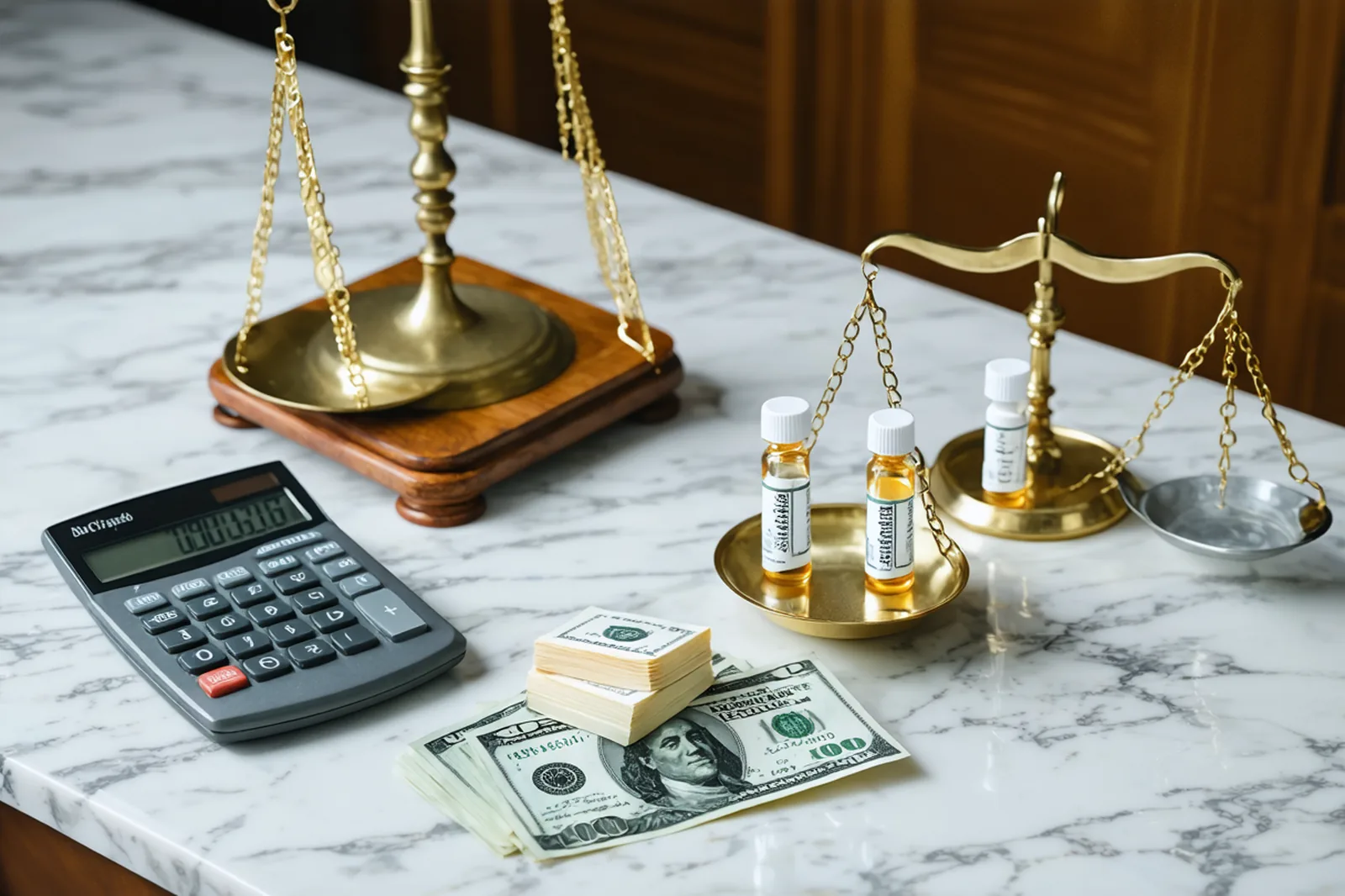
Botox wholesale runs $8–$14 per unit; retail $12–$20. The $5–$12 spread per unit is where medspa profit lives.
Your per-unit acquisition cost is not fixed. AbbVie Aesthetics structures pricing in tiers based on annual spend. A single-provider practice buying 500 units per year pays more per unit than a 10-location chain buying 50,000 units annually. Typical volume thresholds:
- Under 1,000 units/year: $12–$14 per unit
- 1,000–5,000 units/year: $10–$12 per unit
- 5,000+ units/year: $8–$10 per unit
Purchasing through an MSO (management services organization) or a GPO like Alle (AbbVie's loyalty program) can lower your cost by 1–3 per unit compared to independent direct purchasing. Alle members also earn rebates—typically 2–5% of annual spend, paid quarterly or annually depending on tier.
Competitor products (Dysport, Xeomin, Jeuveau) offer different economics. Dysport's unit cost is often 15–25% lower than Botox, but patient perception and dosing requirements (Dysport requires roughly 2.5–3 units per Botox unit) affect true per-treatment cost. Xeomin and Jeuveau occupy the middle ground, with per-unit costs 10–20% below Botox but smaller market share and lower patient demand.
Retail Pricing and Margin Math
Most medspas price Botox at $12–$18 per unit; premium practices in major metros charge $18–$20. A typical forehead-and-glabella treatment uses 20–24 units, so a patient pays $240–$480 for a session. At a $10 per-unit acquisition cost and $15 retail price, your gross profit is $5 per unit, or $100–$120 per treatment.
Gross margin (before labor, rent, utilities, marketing) typically runs 50–65% for Botox. That sounds healthy, but it erodes quickly. A nurse injector's fully loaded cost (salary, benefits, payroll tax, malpractice insurance) is roughly $60–$80 per hour. A 15-minute Botox injection consumes 0.25 hours, or $15–$20 in labor. Add product cost ($10), and your cost of goods sold plus direct labor is $25–$30 per treatment. At $15 per unit (20 units = $300), your contribution margin is $120–$150 per treatment—still solid, but the math tightens if your acquisition cost is $12 per unit or your retail price is $12.
Rebate Programs and Loyalty Economics
Alle, AbbVie's direct-to-provider rebate platform, is the largest. Tiers are based on annual Botox and Juvederm spend:
- Tier 1 (under $15,000/year): 2% rebate
- Tier 2 ($15,000–$50,000/year): 3% rebate
- Tier 3 ($50,000–$100,000/year): 4% rebate
- Tier 4 ($100,000+/year): 5% rebate
For a practice spending $60,000 annually on Botox (roughly 5,000 units at $12 per unit), a 4% rebate returns $2,400. That's equivalent to reducing per-unit cost by $0.48. Aspire (Galderma's loyalty program) and Evolus Rewards offer similar structures, though Galderma's rebates typically max at 3–4% and Evolus at 2–3%, reflecting their smaller market share.
The catch: rebate tiers often require bundling Botox with filler (Juvederm, Volbella) or other AbbVie products. A practice committed to Dysport or Xeomin loses access to Alle's rebates and must negotiate directly with Galderma or Evolus—often yielding lower per-unit costs but no loyalty bonus.
Volume Break-Even and Pricing Strategy
A typical medspa needs 800–1,200 Botox treatments per year to justify a dedicated injector and turn a profit. At 20 units per treatment and $15 retail pricing, that's 16,000–24,000 units annually. With a $10 per-unit cost and 50% gross margin, you generate $80,000–$120,000 in Botox gross profit—enough to cover injector salary, space, and overhead if your practice is efficient.
Practices in saturated markets (Los Angeles, New York, Miami) often compete on price, pushing retail rates to $12–$14 per unit. Those in underserved areas or with strong brand positioning hold $16–$20. The gap between your acquisition cost and retail price is your only lever; volume and rebate optimization are the operational ones.
Practical Takeaway
Lock in the lowest per-unit cost your volume justifies (negotiate directly or join Alle if AbbVie is your primary product), price 40–50% above your landed cost, and monitor your rebate tier quarterly. A $0.50 per-unit savings on 10,000 annual units is $5,000 to your bottom line—equivalent to 50–100 extra treatments at your margin rate.
Frequently asked questions
What is the wholesale cost of Botox per unit for medspa owners?
Botox wholesale costs range from $8–$14 per unit depending on purchase volume and contract tier. Practices buying under 1,000 units annually pay $12–$14 per unit, while those purchasing 5,000+ units annually pay $8–$10 per unit. Buying through a GPO like Alle can lower costs by an additional $1–$3 per unit.
How much profit margin can a medspa make on Botox?
Gross margins on Botox typically run 50–65% before overhead. At a $10 per-unit acquisition cost and $15 retail price, you earn $5 per unit in gross profit. However, after accounting for injector labor ($15–$20 per 15-minute treatment) and product cost, contribution margin per treatment is roughly $120–$150.
What is the Alle rebate program and how much money can I get back?
Alle is AbbVie's loyalty program offering rebates of 2–5% based on annual spend: Tier 1 (under $15K) earns 2%, Tier 2 ($15K–$50K) earns 3%, Tier 3 ($50K–$100K) earns 4%, and Tier 4 ($100K+) earns 5%. A practice spending $60,000 annually receives a 4% rebate of $2,400, equivalent to reducing per-unit cost by $0.48.
Is Dysport cheaper than Botox for medspa owners?
Dysport's per-unit cost is 15–25% lower than Botox, but it requires roughly 2.5–3 units per Botox unit, making true per-treatment cost comparable. Dysport also carries lower patient demand and brand recognition, and switching from Botox means losing access to Alle's rebate program unless you negotiate separately with Galderma.
How many units of Botox does a typical forehead treatment use?
A typical forehead-and-glabella treatment uses 20–24 units, costing a patient $240–$480 at standard retail pricing of $12–$20 per unit. Premium practices in major metropolitan areas charge $18–$20 per unit, while standard practices charge $12–$18 per unit.
What is the cost of a nurse injector per Botox treatment?
A nurse injector's fully loaded cost (salary, benefits, payroll tax, malpractice insurance) is roughly $60–$80 per hour. A 15-minute Botox injection consumes 0.25 hours, translating to $15–$20 in direct labor cost per treatment.
Free weekly brief
Get the free weekly brief.
The week's most important moves in medical aesthetics — distilled to a two-minute read, free. Unsubscribe in one click.
Free · weekly · unsubscribe anytime. Privacy.
Stay three moves ahead of every practice in your market.
Knowing it happened is table stakes. Inside MedSpa Pro hands you the play — what each move means for your margins, your license, and your patients, and exactly what to do about it — in a two-minute brief every morning. The owners who read it never get blindsided.
Get the edge · $20/moJoin the owners who run ahead of the industry. Cancel anytime, one click.